EventsPublished on
World Kidney Day 2026 in Gabon: prevention at the heart of a national mobilisation
Screening, training and scientific meetings in Lambaréné, Oyem and Libreville for the 2026 edition.
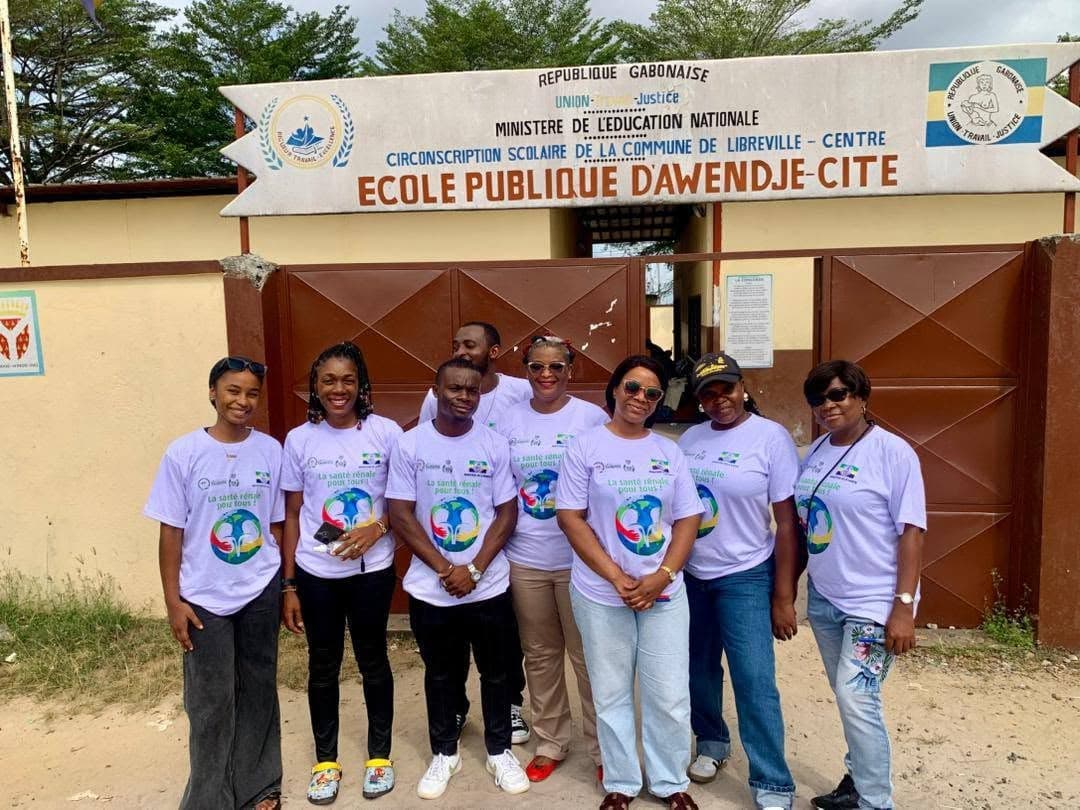
For the 2026 edition of World Kidney Day, the Gabonese Society of Nephrology (SOGANEPH), in partnership with the Ministry of Health and Social Affairs, continued its commitment to prevention, early screening and better management of kidney disease in Gabon.
Over several days, scientific activities, screening campaigns and awareness actions were organised in several provinces, notably in Lambaréné, Oyem and Libreville, mobilising health professionals, volunteers, administrative authorities and many citizens.
A launch built on collaboration
The activities officially began on 11 March 2026 with the arrival of the screening teams in Lambaréné, in the Moyen-Ogooué province.
Before operations started, the World Kidney Day organising team met the Governor of Moyen-Ogooué. This meeting made it possible to coordinate the planned field activities and to strengthen collaboration between local authorities and health players to ensure the campaign ran smoothly.
That same day, training sessions on the management of kidney failure were held in the auditoriums of the Regional Hospital Centres (CHR). They enabled health professionals to update their knowledge and share their experience in order to improve the quality of patient care.
Strong mobilisation around screening
On 12 March 2026, several screening sites welcomed large numbers of participants who came for free consultations and prevention advice.
In Lambaréné, SOGANEPH teams ran awareness campaigns at various sites, notably the Municipal Grandstand, Lalala Public School and the Town Hall of the 2nd District, where the population turned out in large numbers.
Participants were informed about the main risk factors for kidney disease, ways of preventing it and the importance of regular screening to detect any abnormality early.
In Libreville, screening operations were also organised at the Awendjé site, offering many residents medical support and personalised advice.
Similar campaigns were rolled out in other localities at the same time to widen access to prevention across the country.
Scientific meetings to strengthen skills
Alongside the field activities, several scientific meetings brought nephrology specialists together.
In Lambaréné, the scientific meetings organised at the initiative of SOGANEPH and the Ministry of Health and Social Affairs provided an important forum for exchange between doctors, researchers and health professionals.
Discussions focused on prevention strategies, advances in the management of kidney failure and prospects for improving care in Gabon.
Scientific meetings were also held in Oyem, helping to build the capacity of health professionals and to spread good practices in nephrology.
A campaign that continues beyond World Kidney Day
One week after the official events, SOGANEPH continued its awareness mission by sharing new images of the activities organised in Lambaréné.
The aim of these posts was to remind everyone that prevention does not stop after a single day but is a permanent commitment.
The prevention messages shared throughout the campaign recalled the essential steps for preserving kidney health in the long term:
- drink enough water every day;
- eat a healthy, balanced diet;
- have regular medical screening;
- see a health professional promptly if you have risk factors or suggestive symptoms.
A collective effort for kidney health
The 2026 edition of World Kidney Day once again confirms the commitment of SOGANEPH, the health authorities, local communities, health professionals and the many volunteers mobilised in the field.
Thanks to the combination of screening campaigns, community actions, training and scientific meetings, this mobilisation helps strengthen the prevention of kidney disease, improve public knowledge and promote wider access to care.
The fight against kidney disease remains a major public health issue. It relies above all on prevention, information and early screening.
Because every action counts, let’s keep protecting our kidneys by adopting good habits, staying well hydrated and seeing health professionals regularly. Together, let’s make prevention a habit for a healthier population.